

When considering metal roof installation in Austin TX, choosing the right company is crucial. With 19 years of experience, we at Texas Home Improvement have mastered the art of providing quality and durability with every installation. Our team’s expertise ensures your roof not only lasts up to 50 years but also adds significant value to your home.
Metal roofs are celebrated for their energy efficiency and eco-friendliness. Many homeowners in Austin are switching to metal roofs because they help keep homes cooler and reduce energy costs. By working with us, you get the benefit of our professional service and our commitment to sustainable practices.
If you’re interested in a durable, stylish, and cost-effective roofing solution, metal roofs are an excellent choice. Our skilled professionals are ready to assist you with the entire process, from choosing the right materials to the final metal roof installation in Austin TX. Book your free estimate with Texas Home Improvement today and discover why so many Austin homeowners trust us for their metal roofing needs.
Key Takeaways
- Experience and quality are vital for durable metal roofing.
- Metal roofs offer energy efficiency and environmental benefits.
- Professional metal roof installation in Austin TX ensures long-lasting performance.
Book your free estimate for expert metal roof installation in Austin TX with Texas Home Improvement. 737-204-0534
Choosing the Right Metal Roofing
Metal roofing in Austin, TX offers various styles, colors, and types to match your home’s aesthetic and performance needs. We will explore the different types of metal roofing available, how to match your roof to your home’s style, and the benefits of standing seam metal roofs.
Types of Metal Roofing
Selecting the right type of metal roofing is crucial. Options include metal shingles, corrugated panels, and standing seam, each suited for different preferences and needs.
- Metal Shingles: These mimic traditional shingles but offer greater durability and longevity. Made from materials like aluminum or steel, they’re resistant to extreme weather conditions.
- Corrugated Panels: Lightweight and easy to install, these panels are ideal for both residential and commercial buildings.
- Standing Seam: Known for their sleek lines, these panels are a popular choice for modern designs. The hidden fasteners provide a uniform look and reduce the risk of leaks.
Matching Style and Color to Your Austin Home
Austin’s unique architectural styles require thoughtful planning when choosing a metal roof.
- Color: Metal roofs come in a variety of shades. Opt for colors that complement your home’s exterior. Galvalume and painted finishes are popular choices due to their long-lasting color retention.
- Style: Aligning the roof’s style with your home’s design is essential. For a rustic look, corrugated panels work well. In contrast, standing seam suits contemporary styles.
- Reflective Coatings: These coatings can help reduce your home’s cooling costs, a significant benefit in Austin’s hot climate. They reflect more sunlight, keeping interiors cooler.
The Benefits of a Standing Seam Metal Roof
Standing seam roofs offer numerous advantages for homes in Austin, TX.
- Durability: These roofs can last up to 50 years with proper care. Made from high-quality materials like steel or Galvalume, they withstand harsh weather.
- Energy Efficiency: The design minimizes gaps, reducing the amount of heat that enters the home. This increases energy efficiency, lowering cooling costs.
- Maintenance: Minimal maintenance is needed as there are no exposed fasteners, which reduces the chance of leaks and corrosion.
- Aesthetics: The sleek lines of standing seam roofs provide a clean, modern look. They’re available in various colors to match any home’s style.
Choosing the right metal roof for your Austin home involves considering these factors to ensure a perfect fit for both function and appearance.
The Installation Process
Metal roof installation in Austin TX involves several crucial steps, from initial inspection to the actual installation process. We’ll go over these steps to ensure every detail is clear and concise.
Initial Roof Inspection
Before we begin with the actual work, an initial roof inspection is vital. We examine the current condition of the roof, checking for any signs of damage or wear. This helps in planning and ensures all underlying structures are sound.
We measure the entire roof to get accurate dimensions. This step includes identifying any specific areas that might need special attention, like valleys, ridges, or areas with existing leaks. Our thorough inspection sets the foundation for a successful metal roof installation in Austin TX.
Preparing for Installation
Preparation ensures a smooth metal roof installation in Austin TX process. First, we remove old roofing material if necessary, especially if there’s significant damage or if it’s incompatible with the new metal roof. This step ensures we start with a clean slate.
Next, we lay down a waterproof underlayment. This barrier protects against moisture and adds an extra layer of security. We also check the roof’s structure to ensure it can support the new metal roofing system.
Metal Roofing Installation Steps
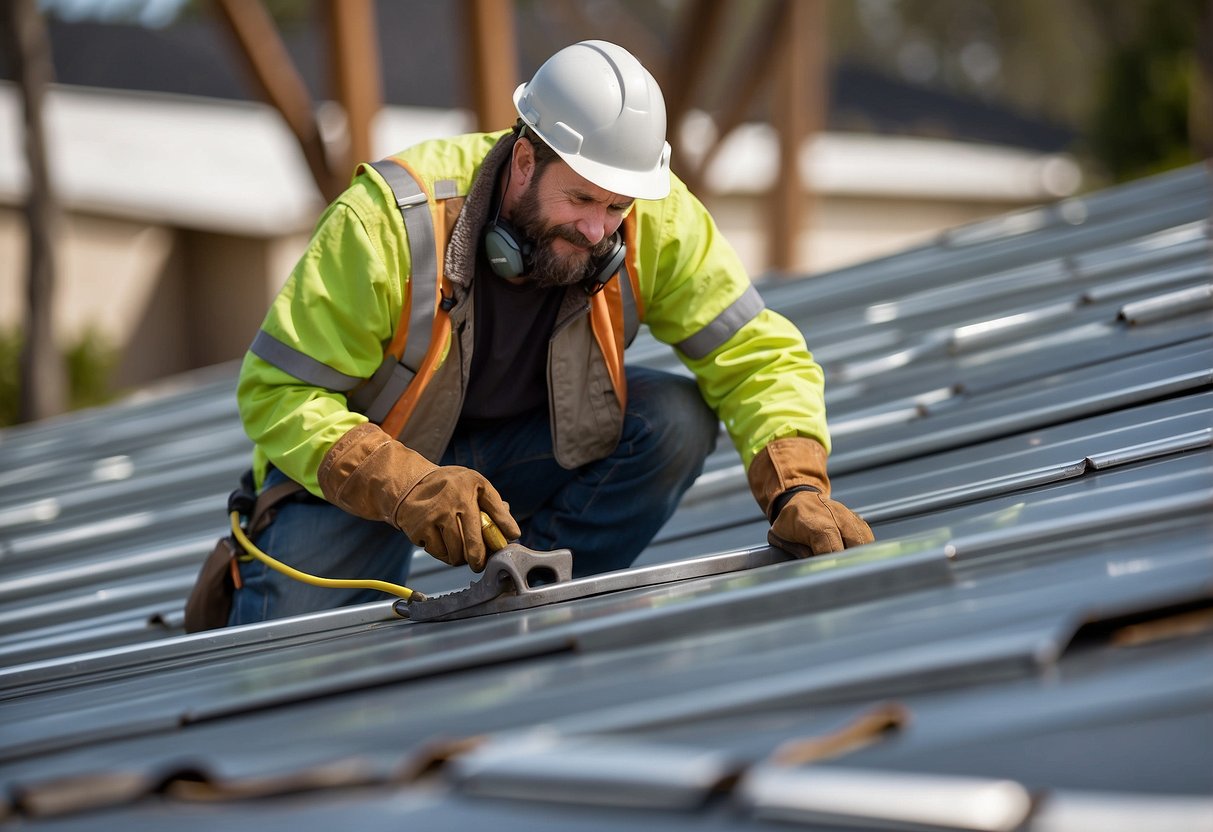
With preparation complete, we proceed to the metal roof installation in Austin TX steps. We start by installing metal panels, following a specific order to ensure maximum efficiency and coverage. Each panel is securely fastened to the roof’s substrate with screws and other fasteners.
We use flashing around edges, chimneys, and other protrusions to prevent leaks. Attention to detail in these areas is crucial for long-lasting durability. Finally, we apply a sealant to all seams and fasteners, ensuring a watertight finish.
Throughout the process, our team follows safety protocols, using proper equipment to protect both the workers and the property. With these meticulously followed steps, we ensure a durable and aesthetically pleasing metal roof installation in Austin TX.
Energy Efficiency and Environmental Considerations

Metal roofs offer excellent energy efficiency and are environmentally friendly. Their reflective properties reduce cooling costs, while their recyclability makes them a green choice.
Insulation and Energy Savings
Metal roofs can help keep homes cooler by reflecting heat away. This reflective quality minimizes heat absorption, which is very useful in the hot climate of Austin, TX. Proper insulation under the metal roofing further enhances energy efficiency, reducing energy costs.
Hail resistance: These roofs are also resistant to damage from hail, which is a common issue in Texas. This durability means fewer repairs and replacements, contributing to long-term cost savings.
For additional energy savings, we can install solar panels on metal roofs. Their strong structure provides a stable base for solar installations, further cutting down on electricity bills.
Eco-Friendly Roofing Options
Metal roofing is one of the most eco-friendly options available. Many metal roofs are made from recycled materials, and they can be recycled again at the end of their lifespan. This reduces landfill waste compared to traditional roofing materials like asphalt.
Longevity: Metal roofs last significantly longer (about 40-70 years) compared to asphalt shingles, which helps cut down on waste and the need for new materials. This makes metal roofing an excellent choice for those looking to maintain an environmentally-conscious home.
Choosing metal for our roofs also means less frequent maintenance, which translates to fewer resources used over time. This sustainable choice helps protect our local environment while also providing a cost-effective roofing solution.
Working with Roofing Professionals
Finding the right roofing professional can make a significant difference in the lifespan and performance of your metal roof. Key factors include selecting a reputable local contractor and understanding the warranties and guarantees they offer.
Selecting a Reputable Roofing Contractor
When choosing a roofing contractor, it’s important to look for companies with strong reputations and proven experience. In Austin, options like LOA Construction, DG Roofing, and Straight Solutions stand out with their extensive expertise and customer reviews.
Ensure the contractor is licensed, bonded, and insured. This protects us from financial losses and ensures the work meets local building codes. We should also consider their customer service and responsiveness. Companies with high ratings and positive feedback, like RestoreMasters, often provide detailed consultations and flexible service options.
Lastly, check the contractor’s experience with metal roofing specifically. Metal roofs have unique installation requirements, and working with experienced professionals ensures they are installed correctly the first time.
Understanding Warranties and Guarantees
A good warranty is crucial for any roofing project. When investing in metal roofing, we should carefully review both manufacturers’ warranties and contractor guarantees. Manufacturers usually cover material defects for decades, while contractors offer guarantees on workmanship.
It’s important to ask detailed questions about the length and coverage of these warranties. Some contractors, like those in the Austin area, often provide extended warranties and comprehensive service agreements. Make sure to understand any limitations or exclusions.
Additionally, we should ensure that the warranty is in writing and that all terms are clearly outlined. This helps in avoiding misunderstandings or unexpected costs down the line.
Frequently Asked Questions
In Austin, Texas, metal roofs are becoming a popular choice for residential properties. Let’s explore the benefits, costs, notable installers, lifespan, incentives, and energy efficiency of metal roofing.
What are the benefits of installing a metal roof on a residential property in Austin, TX?
Metal roofs are durable and can withstand harsh weather conditions common in Austin. They are fire-resistant, require low maintenance, and can improve the energy efficiency of homes. Additionally, metal roofing offers a modern look that can increase property value.
How does the cost of metal roof installation in Austin TX vary?
The cost of installing a metal roof in Austin ranges from $7 to $14 per square foot. For an average-sized home, this translates to approximately $10,500 to $21,000. Factors that affect cost include the type of metal used and the complexity of the installation.
Who are the most reputable metal roof installers in Austin?
In Austin, some reputable metal roof installers include Texas Home Improvement and Mammoth Roofing & Solar. These companies have strong client testimonials and years of experience in providing quality roofing services.
What is the typical lifespan of a metal roof in the Austin climate?
A well-installed metal roof in Austin can last 40 to 70 years. This longevity depends on the type of metal used and proper maintenance. Compared to asphalt shingles, which last 15 to 20 years, metal roofs are a more durable option.
Are there any tax credits or incentives for installing a metal roof in Austin, TX?
Homeowners in Austin may be eligible for federal tax credits for energy-efficient home improvements, including metal roofing. It’s essential to consult with a tax professional or check current incentives provided by government programs and energy companies.
How do metal roofs compare to other roofing materials in terms of energy efficiency?
Metal roofs reflect solar radiant heat, which can reduce cooling costs by 10-25%. In Austin’s hot climate, this makes metal an energy-efficient choice compared to materials like asphalt shingles that absorb heat and increase indoor temperatures.


